
Internal linking and useful reader routes
Send each useful link to the right surviving answer.
After approved pages merge, update the internal sources that still reference retired routes. Choose the final destination and any fragment by the answer the source passage promises. A working redirect is useful continuity, but it does not prove that the new page still fulfills the old link’s purpose.
Free learning from Semantec SEO.

Start with an approved consolidation map.
A consolidation map records which URLs retire, which page survives and which useful content moves. It should identify the former page jobs and the sections that preserve them. Link refresh consumes that decision; it does not choose a new owner simply because a URL happens to resolve.
Confirm that the survivor contains the explanations promised by the old incoming links. If a comparison or exception disappeared in the merge, do not point its old anchor to a generic introduction and call the task complete. Restore the needed content, select a different accepted owner or revise the source passage.
Distinguish a redirect from a canonical preference. A redirect changes the route used to reach content; a canonical annotation expresses a preferred representative for duplicate or very similar pages. A fragment identifies a place within a document and is not a separate canonical page.
Google recommends consistent internal linking to the preferred canonical URL. That supports direct owner selection, but does not prove that a chosen consolidation is appropriate or guarantee the search engine’s canonical choice. Content fit remains a separate decision.
Find the sources that still point to retired routes.

Inspect page bodies, menus, breadcrumbs, hub entries, reusable templates, cards and media links. Include managed references in sitemaps, structured data and future briefs where they identify the retired owner. These references have different technical roles; changing one HTML anchor does not update them all.
Record each source location, old href, anchor or accessible name, intended question, new destination and action. Keep parameters and fragments visible during the audit so you do not erase meaningful differences by normalizing everything to a bare path.
Prioritize links that break a task, point through a chain of redirects or promise missing material. A redirect chain is a sequence of intermediate moves. Test the whole route and final response instead of assuming the first redirect’s location is the final owner.
Where the source is under your control, a direct link to the accepted final owner avoids unnecessary intermediate routes. Preserve an appropriate redirect for old bookmarks or external links; updating internal links does not make those old entry points disappear.
Worked example: refresh links after a fictional merge.

Assume an approved fictional consolidation merges /layout-basics/ and /layout-comparison/ into /room-layouts/. The survivor preserves an introduction and a comparison block with the ID layout-comparison. It also retains an explanation of occupancy limits. These routes illustrate a plan; they are not asserted to exist on this website.
The source task’s sentence reads: “Compare the two seating arrangements before choosing the room.” Its link still points to /layout-comparison/#two-options. Another page links “room layout introduction” to /layout-basics/. A hub card also points at the retired comparison URL.
The source inventory shows that the old comparison URL first redirects to an intermediate /layouts-old/ route and then to the survivor. The old fragment two-options does not exist in the final page. A successful final status alone misses the broken target promise.
Update the first link directly to /room-layouts/#layout-comparison after confirming that the block contains the promised comparison. Keep the comparison wording. Update the introduction anchor to /room-layouts/ or its accepted introduction block. Update the hub card’s destination and summary to describe the combined resource.
Do not replace “Compare the two seating arrangements” with a generic homepage anchor, and do not drop occupancy conditions from the source merely to match a shorter survivor. If the survivor lacks necessary detail, hold that link until the content or owner decision is repaired.
Check fragments, ownership and changed meaning.
Fragments require an element with the intended ID in the final document. Verify the target exists once, matches the promised explanation and is usable after navigation. Do not assume that a redirected URL preserves a useful fragment or that the same heading text implies an unchanged ID.
An owner can change without a URL breaking. A page may be repurposed, moved to another audience or lose the block that the anchor described. Read the destination, not just the status. Update the source’s context only when the new statement is supported and still serves its task.
For a true missing resource, choose between restoring content, replacing the route with an accepted equivalent, revising the surrounding passage or removing the link. Removing an anchor while leaving “see the comparison” in the text creates another broken promise.
Do not use bulk string replacement without reviewing ambiguous matches. One retired URL may have served different block questions; those sources may need different new fragments or even different destination pages. Keep a record of exceptions rather than forcing all sources to one answer.
| Source promise | Old route problem | Accepted replacement | Validation |
|---|---|---|---|
| Compare two arrangements | Retired comparison plus missing two-options fragment | /room-layouts/#layout-comparison | Block exists and contains both arrangements |
| Room layout introduction | Retired basics URL | /room-layouts/ introduction | Opening still serves introductory readers |
| Hub card | Retired comparison and outdated summary | Combined resource owner | Card explains broadened page job |
| Old bookmark | Two redirects through one intermediate URL | Approved direct redirect map | Test final destination; preserve continuity |
| Occupancy limitation | Detail missing after hypothetical edit | Hold until detail restored or owner replaced | Do not erase necessary conditions |
Verify the full route set and keep a change record.
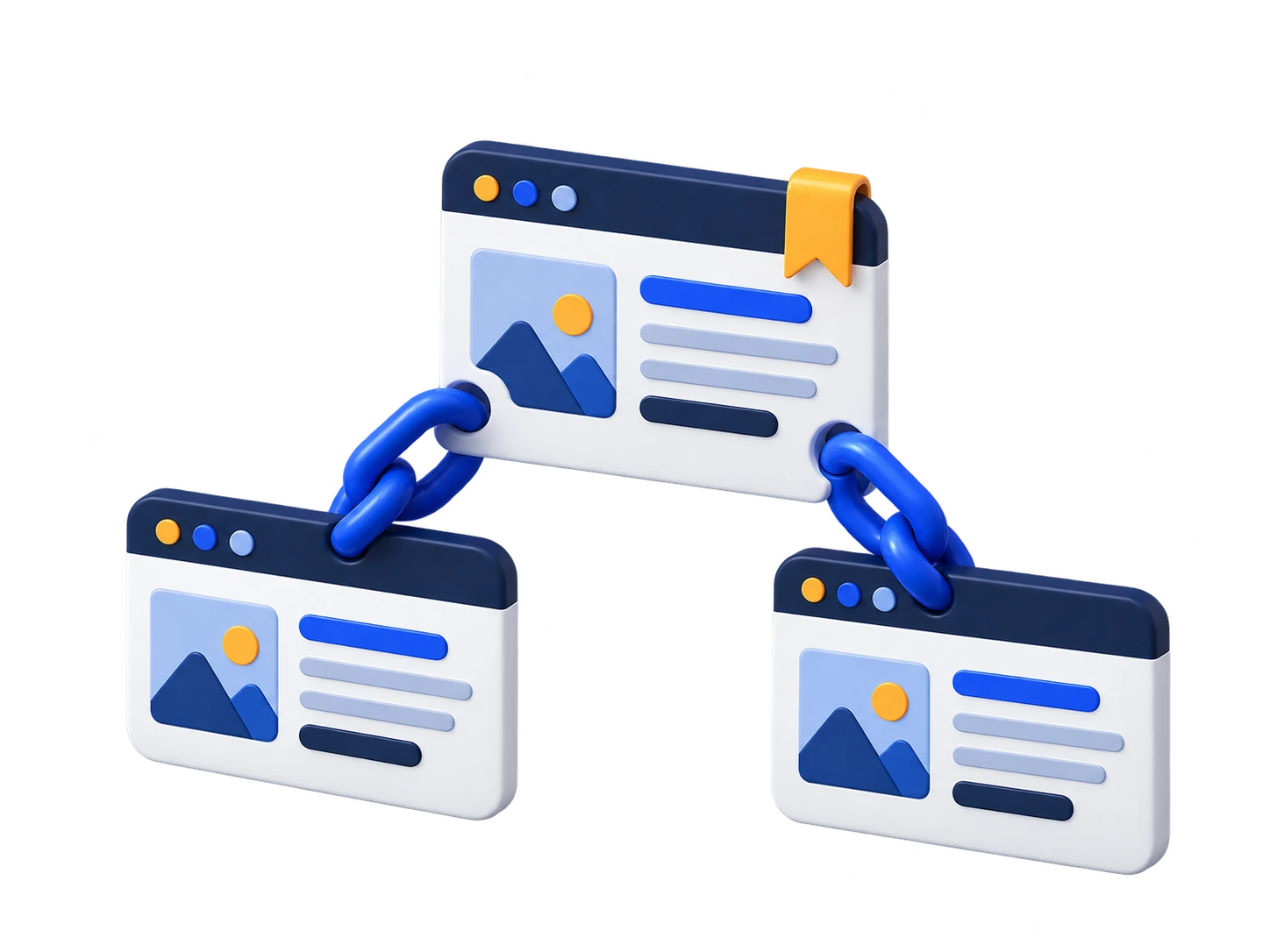
After implementing the approved changes, inspect the stored source hrefs and the public pages. Follow each changed route, record intermediate responses if any, check the final owner and verify the fragment in the rendered document. Test the visible anchor and accessible name with its surrounding text.
Check that hubs, navigation and useful incoming routes to the survivor remain intact. Review for new orphans where a retired page previously connected to supporting explanations. Compare canonical preferences, sitemaps and relevant machine-readable references for contradictions without treating them as substitutes for ordinary reading routes.
The change record should include source URL and component, old target, new target, preserved question, anchor, reason, consolidation decision, editor, date, dependencies and observed result. Mark a proposed change separately from one implemented and verified.
Recheck after template updates or further consolidation. Keep the old-to-new map for troubleshooting historical links. A clean route and preserved context are verifiable outputs; traffic, ranking and engagement effects require separate evidence and cannot be inferred from the refresh alone.
Sources and further reading.
The platform documents explain technical link handling. The decision records and fictional examples on this page are editorial methods; they do not report a live audit or guarantee a search outcome.
Continue learning
Choose the next related task.
Use the internal linking learning hub for related route decisions, or return to the semantic SEO learning overview to choose another subject.