
Semantic SEO
Product Version Content Migration: Keep Each Audience on the Right Instructions
Product version content migration compares the attributes and tasks of an existing version with a new release, plan or model, then assigns an appropriate action to every affected asset. Preserve durable family facts, scope changed claims to their version and keep purchase, support, compatibility and version transition routes distinct. Use it when replacing current content would otherwise erase instructions that existing users still need.
Inspect the API version example
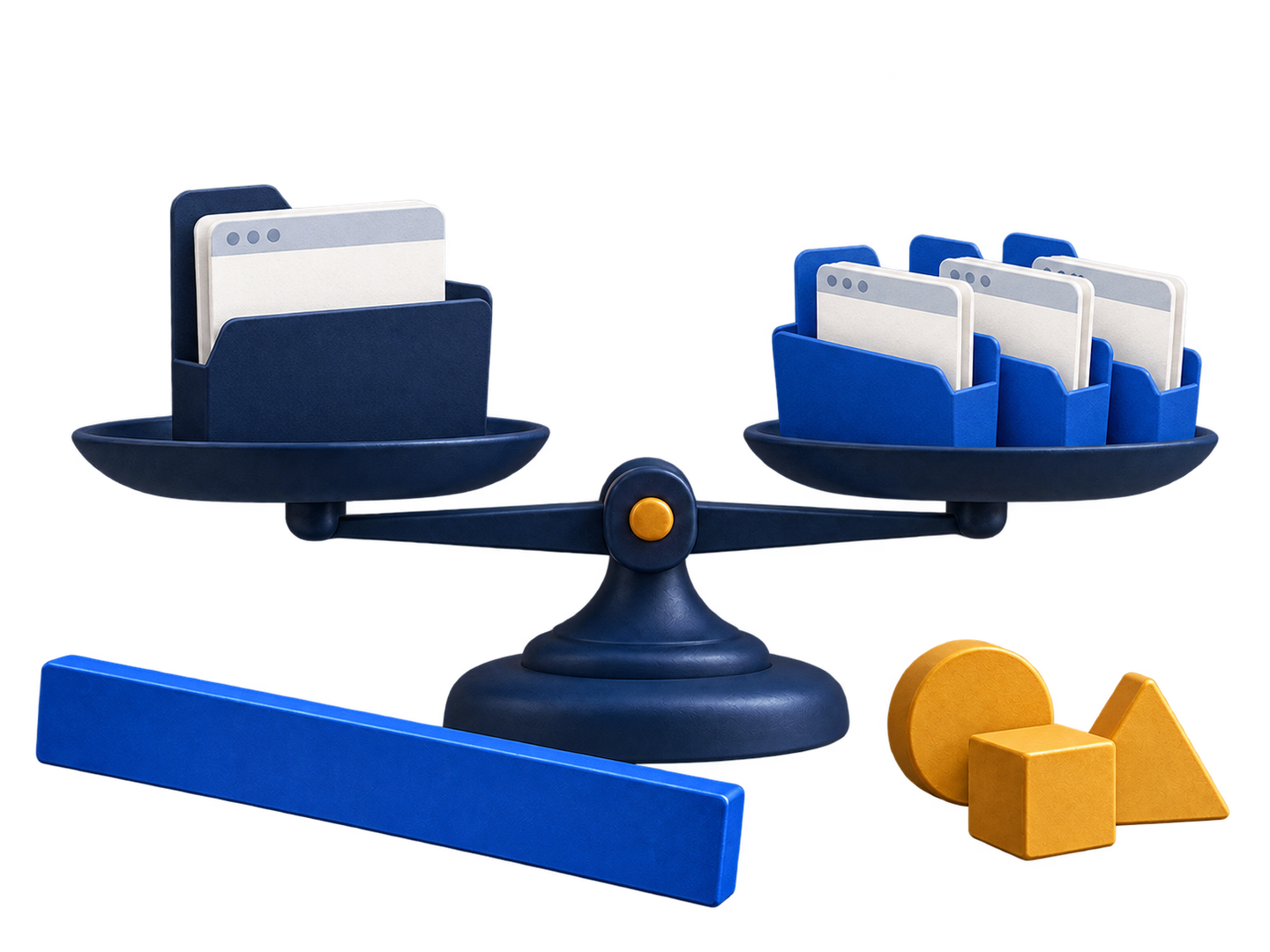
Worked example: a new API method does not make legacy instructions interchangeable
A hypothetical API release changes authentication and removes a group of endpoints. The main documentation is updated, but tutorials, system connection pages, examples and questions retain the old method. A reader can now assemble a mixed process from pages that each appear current.
| Asset and task | Migration action | Acceptance condition |
|---|---|---|
| Current documentation for new setups | Update the supported authentication and endpoint instructions for the new version. | The heading, examples, prerequisites and next steps describe one coherent supported version. |
| Legacy setup instructions for existing users | Retain useful material with explicit version and lifecycle labels. | The page does not imply current purchase availability or support terms beyond verified evidence. |
| System connection and compatibility answers | Split or qualify version relationships where behavior differs. | Each supported combination has evidence; unknown compatibility stays unresolved rather than inheriting a family promise. |
| Version migration tutorial for migrating users | Provide a distinct transition path where the task remains useful. | The starting version, destination version, prerequisites and exceptions are stated and the procedure is independently verified before use. |
| Questions, snippets and visual examples | Update current material or scope retained historical material to its version. | No surrounding question, image, code example or related route silently restores the obsolete current claim. |
The example is a content planning scenario, not executable migration instructions. The appropriate technical sequence and support conditions would come from the product’s verified release and technical setup sources. The editorial plan must keep those sources attached to the version they describe.
Resolve family and version identity before comparing attributes
A durable product family and an individual release are different subjects. A fact about a family can persist while authentication, availability, compatibility or pricing changes for one version. Do not compare a broad family label with a specific release and treat the difference as a reliable attribute change.

- Durable family record. Keep the product identity, stable purpose and supported family relationships in their accepted owner. Do not apply a release specific function to every member of that family.
- Version record. Name the release, plan, model or contract, market, effective period and lifecycle state. Preserve the source that establishes the version and its relationship to the family.
- Inheritance and override. State which attributes are inherited, which are overridden and which are not applicable. An absent version field entry is not permission to copy a convenient family default.
- Current and historical scope. Distinguish available, deprecated, retired and supported historical states according to verified sources. Retirement of purchase availability does not itself establish the end of every support obligation.
- Evidence and conflict. Retain release notes, specifications or other controlling sources with their dates and scope. Record contradictions and unknowns instead of selecting the newest looking entry automatically.
- Accountable owner. Assign product identity, source interpretation, documentation and technical setup decisions to their owners. Keep the accepted version relationship stable before dependent pages consume it.
A rename can accompany a version change without defining it. Resolve identity continuity separately from function and lifecycle differences, then carry the accepted relationship into the migration plan.

Record each attribute’s state rather than replace every earlier entry
Build a comparison at the level of the claim or procedure that readers use. A new release can add one function, remove another and leave a third unchanged. Those states require different content actions.
| State | Meaning to preserve | Content action to assess |
|---|---|---|
| Unchanged or inherited | The same supported fact applies in the declared scope. | Retain the accepted statement and source relationship; confirm the inheritance rule rather than assume it. |
| Added | The new version supports a proposition that the old one did not establish. | Add the qualified current claim and review comparisons or recommendations that depend on the difference. |
| Changed | The field entry, condition, procedure or relationship differs. | Update the current answer and retain version distinctions where existing users need them. |
| Removed or deprecated | A function or recommended method no longer has the same current state. | Revise current instructions, label useful legacy material and identify an appropriate transition or support task. |
| Incompatible | A declared combination does not meet its supported conditions. | State the exact supported boundary and suitable alternatives or prerequisites; avoid a universal claim about all versions. |
| Unknown or conflicting | The available sources do not settle the field entry. | Hold or qualify the affected assertion and request evidence. Do not present unresolved compatibility as a positive default. |
Record the source, effective date, affected audience and dependencies for each change. A valid comparison needs matching scope: different plans, markets or deployment conditions can explain an apparent version difference. Keep that context visible in tables and summaries.
Give each audience a coherent next answer
Current buyers, current users, legacy users and users moving to a newer release can enter through the same search subject while needing different instructions. Version labels in headings and anchors help them select the right path, but the destination must fulfill that label’s promise.
- Purchase. Present current functions and applicable offer conditions for the buying task. Route support questions to documentation rather than replace them with a sales message.
- Existing use and support. Preserve the relevant version’s instructions, limitations and source dates. Keep current navigation from burying a still useful legacy support owner.
- Compatibility. Show the version combination, prerequisite and evidence needed for the claim. Separate confirmed, unsupported and unresolved relationships.
- Move to a newer release or migrate. Identify the starting state, destination, required inputs, exceptions and verified procedure owner. A current feature overview does not automatically explain how to move from an older version.
- Historical reference. Retain useful dated evidence and former behavior without presenting it as a current function. Link to a successor only for the task it can serve.
- No separate task. Consider combining pages or retiring the page when the old page no longer has a distinct useful responsibility. Verify the survivor’s complete answer before replacing an old route.
Create a distinct URL only when the version has a durable task, evidence burden, lifecycle or support need that cannot be expressed clearly on the existing owner. A version number alone is not sufficient reason for another page, and a new release alone is not sufficient reason to delete every old page.
Inspect media, examples and shared rules with the prose
Version errors often survive outside the main answer. Inventory the assets that demonstrate or select the procedure, then assign current, historical, successor, compatibility or migration treatment to each.
- Pages and repeated answers. Review product pages, documentation, comparisons, questions, support and relevant snippets. Inspect the surrounding argument so a revised attribute does not leave an unsupported recommendation.
- Visual and procedural evidence. Check screenshots, diagrams, code samples, downloadable materials, tables and examples. Replace current evidence or label historical scope; a corrected sentence cannot fix contradictory media.
- Routes and selection rules. Update internal links, related content and template conditions that choose a version or next action. Read the final destination after redirects and confirm its subject.
- Structured assertions and metadata. Inspect machine readable cues and summaries that expose changed attributes. Verify any applied change rather than infer it from a visible body edit.
- Future source contracts. Update version mappings, inheritance rules, accepted examples and production briefs. Prevent the next production run from recreating the former current claim.
- Observed result. Retest representative current, legacy, incompatible and migrating cases in the relevant environment. Include rendered reading order, narrow layouts and relevant nonscript access behavior.
Keep an unresolved asset outside the accepted migration scope until its required evidence or applied change is verified. Do not report a mixed set of completed and uninspected outputs as one finished migration.
Close a versioned content plan with evidence and exceptions
Retain the family and version identities, attribute comparison, audience route map, affected asset list and chosen action for each asset. Add source versions, accountable owners, acceptance results, unresolved exceptions and a review trigger.
Preserve the former baseline as history and compare the current state before recovery or another contributor’s update. Where a source event changes policy, identity or a lifecycle decision beyond the version plan, hand over that distinct task with its scope intact.
Questions about migrating product content
Should old version pages be deleted?
Review their usefulness for support, historical reference, compatibility and migration first. Keep or adapt useful answers; combine or remove only through a supported lifecycle decision and an honest destination plan.
How should shared product facts be handled?
Keep durable family facts in their accepted owner and override version attributes only through an explicit supported rule. Do not infer inheritance from a missing field entry.
Which assets need review beyond documentation?
Inspect tutorials, system connection pages, questions, code and visual examples, downloadable materials, comparisons, internal routes, related content and structured assertions that consumed the old version state.
Does updating the main documentation complete the migration?
No. Trace the version change through its dependants and verify the relevant audience paths. A current answer and a stale example can still create a mixed procedure.
Related decisions and sources
Entity Rename and Rebrand Propagation
Resolve identity continuity separately from version functions.
Policy Change Content Propagation
Carry policy scope and legacy terms into their distinct review.
Semantic SEO
Maintain coherent entity, attribute and task relationships.
Planning and production process
Pass the accepted version plan and observed results forward.
The examples describe hypothetical records. The illustrations show relationships rather than source evidence.