
Search Presentation
Result Feature Volatility Log: Keep Observations Separate From Strategy
A result feature volatility log records the context, visible elements and changes in search presentation across observations. Keep the exact query, environment, date and saved observation beside the description, then separate what was seen from an explanation of why it appeared. Use the record to identify further checks and assess a proposed change against the usefulness of the complete answer beyond one temporary presentation.
Inspect the hypothetical process list example

Hypothetical example: one visible list does not establish a durable requirement
Assume a team sees a process list in a featured snippet during one manual check, then proposes rebuilding its page around a list. The appropriate first record is the observed query, context, saved observation and answer relationship. One appearance does not establish that the same presentation will persist or that a list is the best answer for every related task.
| Assumed case | What the log could record | What it could not establish |
|---|---|---|
| A process list appears in one recorded check. | A list presentation was visible for that query and environment at that time, with a retained saved observation. | That the presentation is permanent, that the page must use a list or that all readers received the same result. |
| A later comparable check does not show that list. | The recorded presentation differs between the two checks. Retain both saved observations and their context. | That a specific page edit caused the difference or that the source page became unsuitable. |
| A check uses a different device or query wording. | The environments differ, so describe the observed difference and the changed conditions. | A comparison that isolates time, or a causal explanation of device or wording effects from this pair alone. |
| Further checks show mixed presentations. | The recorded set contains variation within its observed scope. | A universal frequency, stable platform rule or representative history of all searches. |
These cases are invented teaching assumptions. They are not a log of searches performed for this page. A real register needs genuine saved observations and known context; missing earlier observations must remain missing.
Define a repeatable observation contract
Record the conditions another reviewer needs to interpret a saved observation. Keep planned conditions separate from what was known during collection. A screenshot cannot recover an unrecorded market, query or login state after the fact.
- Exact query. Retain the wording, spelling, query language and any meaningful variation. Do not combine related phrases into one observation without preserving the original entries.
- Market and environment. Record the relevant country or market, location setting where known, device category, viewport or collection environment and visible state. Mark unknown details explicitly.
- Date and collection method. Keep observation time with timezone, manual or documented collection method and any limitations. A date on a slide deck is not necessarily the date of the saved observation.
- Visible elements. Describe title links, snippets, featured snippets, questions, images, videos, local or product elements and any other observed presentation using appropriate terminology. Do not infer unseen elements.
- Sources and context. Retain visible source URLs or attributions, answer form and surrounding result context needed for interpretation. Keep the record reference connected to the description.
- Reviewer and next check. Name the accountable owner, interpretation state, confidence limits and review trigger. Separate a proposed page action from the observation itself.
Google’s visual elements documentation states that presentation can change over time and differ with device, country, query language and other factors. This supports recording context; it does not identify the cause of a particular observed change.

Classify the recorded change without inventing its cause
Compare like conditions where possible, and retain meaningful differences where they cannot be controlled. A useful change label describes the evidence rather than explain a platform mechanism the observation cannot establish.
| Label | Evidence needed | Limit to preserve |
|---|---|---|
| Appeared | An element is visible in a current saved observation and absent from a genuinely comparable prior one. | Its first observed appearance is not necessarily the first time it existed. |
| Disappeared | A previously recorded element is not visible in the current inspected scope. | Absence from the inspected view does not establish universal removal. |
| Reordered | Comparable elements appear in a different recorded sequence or position context. | A layout comparison is not by itself an explanation of ranking or user exposure. |
| Reformatted | The visible answer or source is presented in a different form. | Check source and subject identity before treating different material as a changed version of the same answer. |
| Stable in the recorded set | The compared observations retain the specified element and relationship. | State the dates and conditions reviewed; do not call the presentation permanently stable. |
| Not comparable or uncertain | Context, source identity, record coverage or prior evidence is incomplete. | Keep the gap explicit and plan a better observation instead of inventing a change history. |
Confidence should describe the available evidence and its limits. An informal confidence label is not a measured probability of selection. There is no editorial shortcut from a set of screenshots to a complete explanation of Google’s systems.
Change the page only for a supported reader benefit
A result presentation can suggest a useful question or format to investigate. Check that suggestion against the page’s owned task, evidence and complete answer before changing the content.
- Answer form. Choose a paragraph, list, table or visual from the operation the reader needs to perform. A process can benefit from ordered steps; a comparison needs comparable criteria and evidence.
- Source and scope. Recheck evidence, units, dates, entity relationships and qualifications before changing wording. An observed format does not authorize a stronger claim.
- Page ownership. Confirm that the question belongs to this page rather than a parent, sibling or distinct task owner. Do not expand a page solely to imitate a temporary result.
- Components and routes. Retain a direct answer, useful support and appropriate next action. Inspect what a new format does to reading order, accessibility and narrow layouts.
- Metadata and site changes. Make a specific supported change only when it serves the task and can be verified. A log observation does not prove that metadata or markup caused selection.
- Monitoring or no change. Keep a useful page unchanged when the evidence does not justify a repair. Record the next check instead of responding to every fluctuation with a rewrite.
Google states that a site cannot mark a page as a featured snippet; its systems decide selection. Keep format planning distinct from a selection guarantee, and do not weaken the answer to satisfy an invented word count or screenshot pattern.
Retain a dated history and a separate recommendation
Use the log as a record of collected evidence, not a permanent strategy document detached from its saved observations. Each derived action needs a reason, owner and condition for another check.
- Plan the comparison. Define the relevant query and observation context, then identify the prior evidence that can support a comparison.
- Record the visible state. Retain genuine records, source attributions and limits. Mark unobserved areas and unavailable conditions instead of filling them from memory.
- Compare time slices. Classify changes, context differences and uncertainty. Keep isolated appearances distinct from patterns within the inspected set.
- Review the proposed strategy. State how a change would improve the complete answer, evidence or next route. Retain monitoring or no change as valid outcomes.
- Check affected content. Check direct answer, sources, entity continuity, page boundary, component, routes and actions together. Keep source review and any implemented or rendered result separate.
- Store and reopen. Preserve saved observations, dates, interpretation, owner, accepted action and next trigger. Recheck recommendations after material page, query, source or presentation changes.
If reporting frequency or volatility numerically, retain the observation count, sampling method, comparable conditions and missing data. Do not apply findings from an illustrative log or a convenient sample to the whole platform.
Questions about presentation volatility
Does one screenshot justify a page redesign?
It can identify something to investigate. Check the context, repeatability and page task before changing the answer. A complete useful page can remain appropriate when presentation varies.
How many observations establish a permanent pattern?
A finite set cannot establish permanence. Define the scope and decision need, retain comparable observations and state the limits rather than invent a universal minimum.
Does a format change prove that our page caused it?
No. The record shows the visible difference within its context. Causal explanation needs additional evidence and should remain separate from observation.
Can no change be the accepted action?
Yes. Keep a useful supported answer when the evidence does not justify a repair, and record a review trigger for the unresolved presentation question.
Related decisions and sources
Lost Answer Format Recovery
Investigate a verified loss before choosing content repair.
Image and Text Answer Pairing
Preserve the complete answer when adding a visual component.
Google visual elements documentation
Use current terminology and the documented context boundary.
Google featured snippet documentation
Read the official selection boundary.
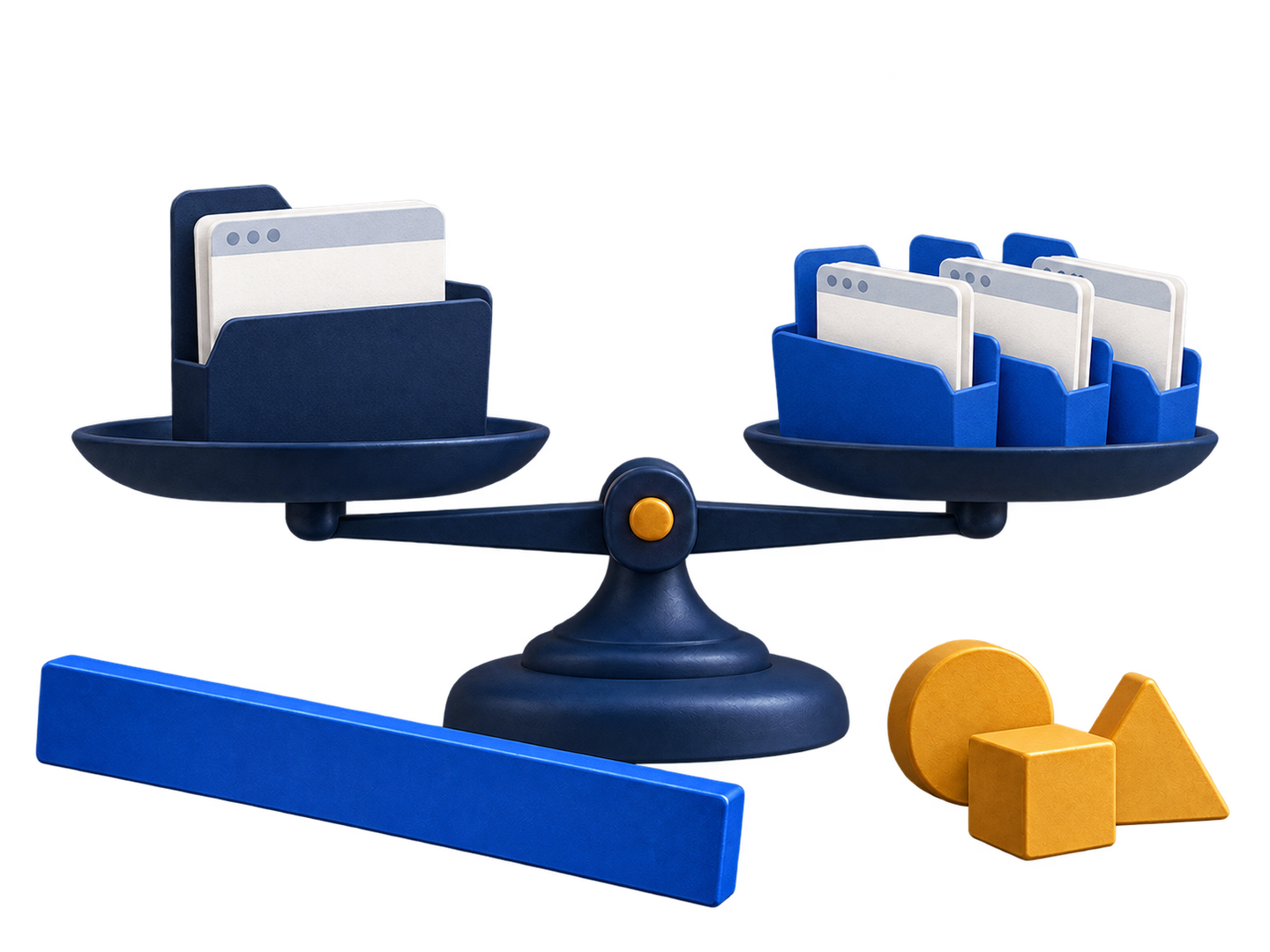
The examples describe hypothetical records. The illustrations show relationships rather than source evidence.